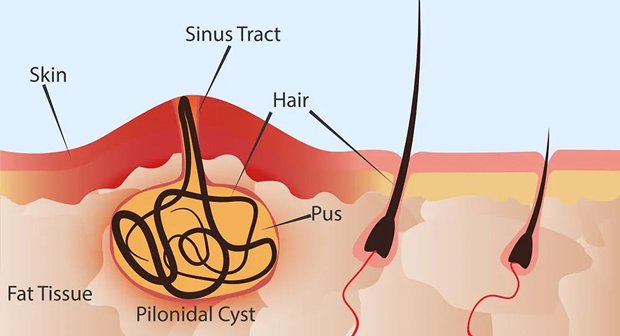
Pilonidal sinus is a small tunnel or cyst that develops in the skin near the tailbone, usually in the cleft between the buttocks. It often contains hair and debris and may become infected, leading to pain and pus formation.

At Savani Surgical Hospital, we provide comprehensive Pilonidal Sinus Treatment in Surat using both conventional and minimally invasive techniques. Our focus is to provide safe, effective, and comfortable treatment with faster recovery.

Early treatment helps prevent recurrent infections and complications.

Stages of Pilonidal Sinus

  • Acute Pilonidal Abscess: Sudden painful swelling with pus formation.
  • Chronic Pilonidal Disease: Recurrent discharge and infection.
  • Recurrent/Complex Disease: Multiple sinus tracts with repeated infections.

Symptoms of Pilonidal Sinus

Redness & Swelling

Inflammation in the cleft area near the tailbone.

Severe Pain

Pain while sitting or moving.

Pus or Blood Discharge

Drainage from a small opening in the buttock region.

Fever (In Severe Cases)

High temperature due to infection.

Causes of Pilonidal Sinus

  • Ingrown or loose hair penetrating the skin
  • Prolonged sitting or driving
  • Excess body hair
  • Repeated friction or pressure in buttock area
  • Poor hygiene

Treatment Options for Pilonidal Sinus

Antibiotics

Prescribed in case of infection to reduce inflammation.

Incision & Drainage (I&D)

Removal of abscess under local or general anesthesia.

Laser / Surgical Treatment

Minimally invasive or flap procedures for permanent removal of sinus tract.

Pre-Surgery & Post-Surgery Instructions

Pre-Surgery Guidelines

  • Avoid alcohol and smoking a few days before surgery.
  • Do not consume solid food 6–8 hours before the procedure.
  • Take a shower on the day of surgery to maintain hygiene.
  • Wear loose and comfortable clothing.
  • Arrange someone to accompany you after discharge.

Post-Surgery Care

  • Take prescribed medications regularly.
  • Maintain proper hygiene in the surgical area.
  • Take sitz baths as advised for pain relief.
  • Avoid prolonged sitting or heavy activity for a few days.
  • Attend follow-up visits as scheduled.